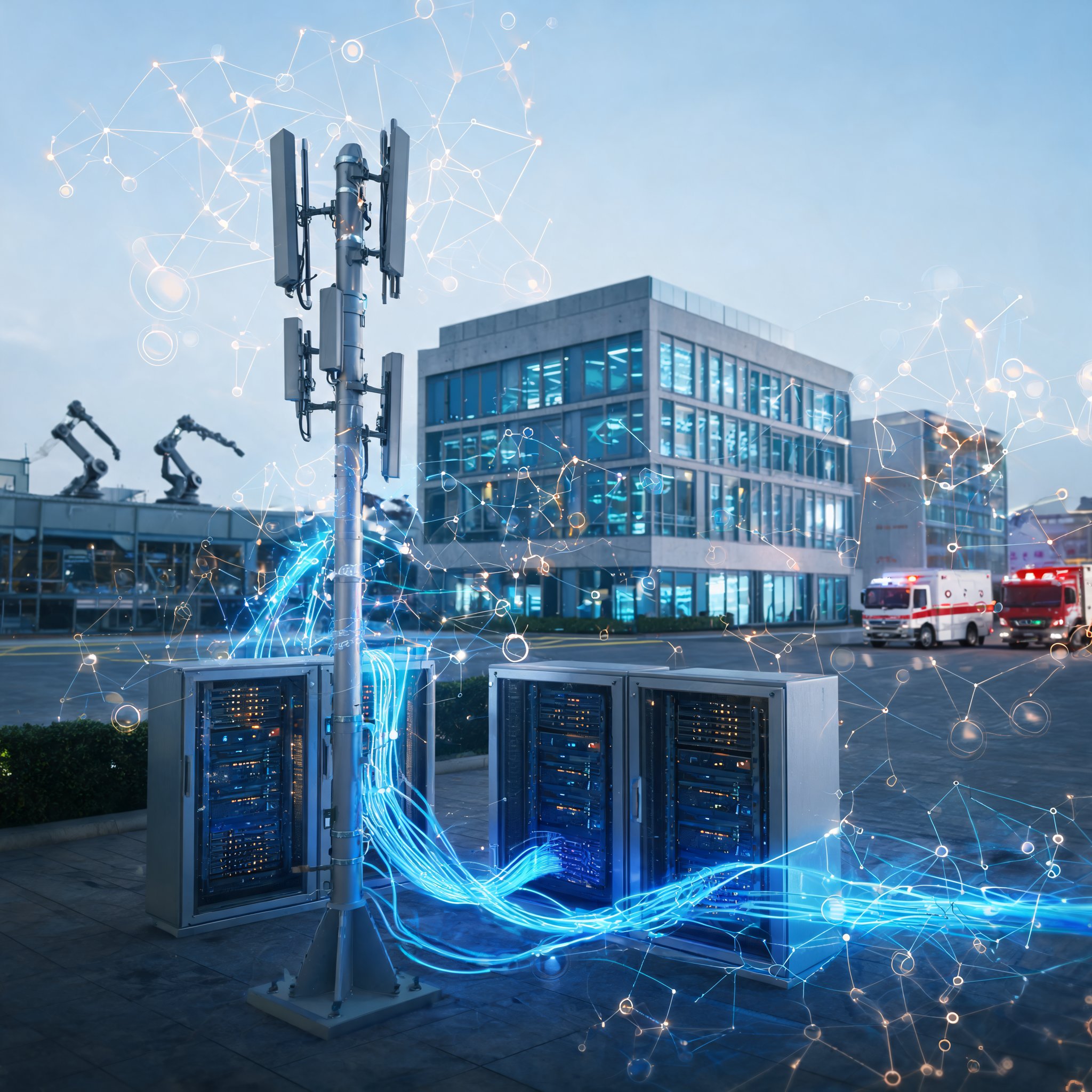
Nokia is running anyRAN trials with BT, Deutsche Telekom, Elisa and Orange as part of a wider AI-RAN effort built on Nokia's RAN software and NVIDIA's Aerial RAN Computer. Nine operators across Europe, the Middle East and Africa are now building or expanding NVIDIA-powered infrastructure, according to the companies, and nearly 20 operators have publicly announced AI-RAN collaborations involving the two suppliers.
The reference architecture combines Nokia's anyRAN software with the Aerial RAN Computer, CUDA, Nemotron open models and Agent Toolkit. Those components are being embedded into Nokia's Autonomous Networks Suite and into third-party operations software from Cisco, TCS and NTT DATA. Dell, QCT and Supermicro are supplying ARC-ready servers, while Red Hat OpenShift provides the cloud-native foundation.
Nokia argues the engineering case rests on assets operators already control: land, power, buildings, spectrum and fibre. By adding accelerated compute at centralised, metro and cell sites, operators could run models closer to the machinery, emergency responders and handsets that use them. The same platform could also let the radio network itself run inference.
Lab measurements from Deutsche Telekom and Nokia indicate typical uplink throughput improvement of about 10% to 15% for AI-based channel estimation. The disclosed lab figure is modest relative to the scale of a distributed compute build-out, and backhaul becomes the constraining variable once inference moves outward. Nokia's 800G coherent pluggables offer one indication of the inter-site capacity it expects operators to need.
Trials are taking different forms. Elisa completed Europe's first AI-RAN field trial, running voice, mobile data and vision AI together on one accelerated platform over 5G. Orange is introducing voice intelligence services for enterprises and emergency responders. Deutsche Telekom is working on physical AI for industrial customers, while BT is preparing live trials in the UK. The trials represent a workload mix rather than a single radio feature.
NVIDIA founder and CEO Jensen Huang said telecom networks were built to carry conversations and will now also carry intelligence. He said operators are turning land, power and connectivity into distributed AI infrastructure, bringing intelligence closer to industries, people and robots, and that the Nokia collaboration extends accelerated computing into the radio network itself.
Nokia Chief Technology and AI Officer Pallavi Mahajan said the next era of connectivity would be defined by networks that distribute intelligence, continuously optimise performance and enable AI-powered services, including physical AI. She said the work aims to give operators more from spectrum today while opening a path toward more autonomous, AI-native 6G networks.
Stacking anyRAN, ARC, CUDA and Nemotron into one reference design is intended to shorten integration. It also ties operators to NVIDIA's programming model at the radio layer, with Nokia's RAN software above it. Cisco and Nokia are both folding Nemotron open models into autonomous-network software, extending that dependency into operations tooling.
Commercial questions remain. Until AI-service revenue materialises, operators carry the financing for distributed compute and backhaul, while suppliers of accelerated compute and RAN software hold the layer where incremental value would accumulate. The disclosed checkpoints cluster in 2027: BT's Birmingham live trial is slated for then, alongside Deutsche Telekom's field trials and Elisa's distributed deployment with commercial AI-RAN services.