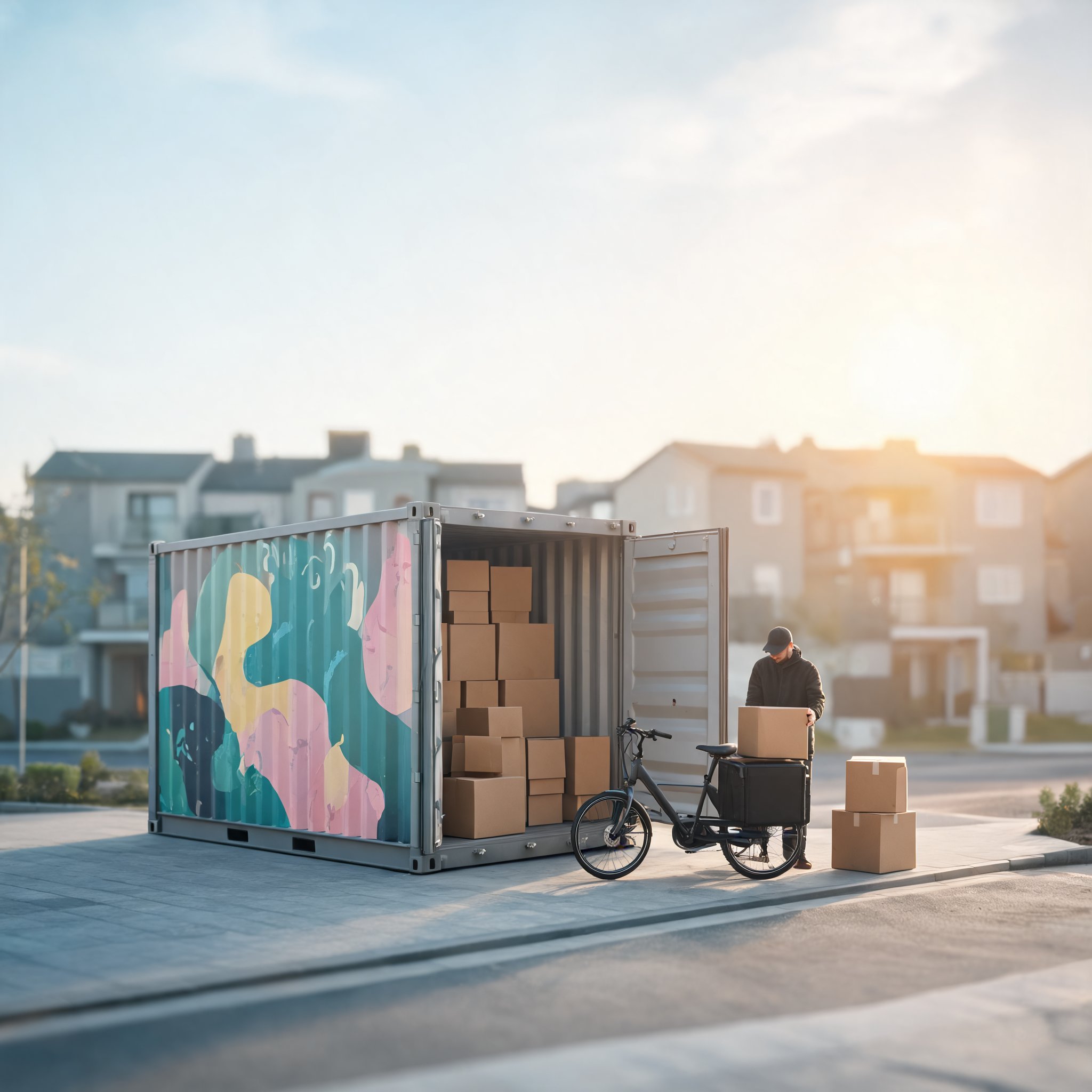
Omniva, the international technology and logistics group, has opened its first MicroHUB in Tallinn. The facility is a specially adapted container equipped with security systems and placed inside a courier’s delivery area, the company said. Omniva aims to reduce van journeys in Tallinn while helping couriers save time and parcels reach customers faster.
The operating model is designed to remove a long trip from the courier’s day. Instead of returning to a sorting centre to reload, couriers can pick up additional parcels at the MicroHUB during their rounds. Omniva said this allows it to use more cargo bikes rather than vans for parcel deliveries.
The arrangement addresses a practical part of urban parcel delivery: couriers need to replenish their loads during the day, but trips back to a sorting centre take time and add vehicle movements. By placing a secure local stock point within the delivery area, Omniva hopes couriers can reload and continue serving customers by cargo bike. That could reduce the number of van trips while giving couriers more time for deliveries.
Pilot results due within a month
The first results from the Tallinn pilot are expected within a month and will help determine the next steps. In the next phase, Omniva plans to test parcel collection from the MicroHUB with Crowd Delivery couriers.
If the pilot is successful, the company plans to introduce more MicroHUBs in Tallinn and a similar solution in Riga, Vilnius and Kaunas. Those plans remain conditional on the trial’s outcome.
Hannes Falten, head of delivery innovation at Omniva, said initial estimates suggest a MicroHUB could save each courier up to three hours a day and allow them to serve around 20 additional customers. He described the concept as an opportunity to handle growing parcel volumes without putting more vans on city streets. The first month’s results will show whether those estimates hold in daily operations.
“We want to move towards smarter logistics with a smaller environmental footprint,” Falten said.
Omniva also gave the first hub a visible community element. The container’s exterior was painted by street artist S-Boy’s team, a move intended to bring more colour and character to the neighbourhood and give passers-by something worth stopping to look at.
The pilot brings together last-mile delivery operations, cargo-bike use and local parcel reloading in one test. Its value will depend on whether the time savings and additional customer visits estimated by Omniva materialise during the trial, and whether the model can be repeated in other Baltic cities.
Omniva’s first MicroHUB is therefore both a local operational trial and a test of whether a container-based resupply point can be replicated. The company plans to use the initial results to decide how quickly, and where, to expand.