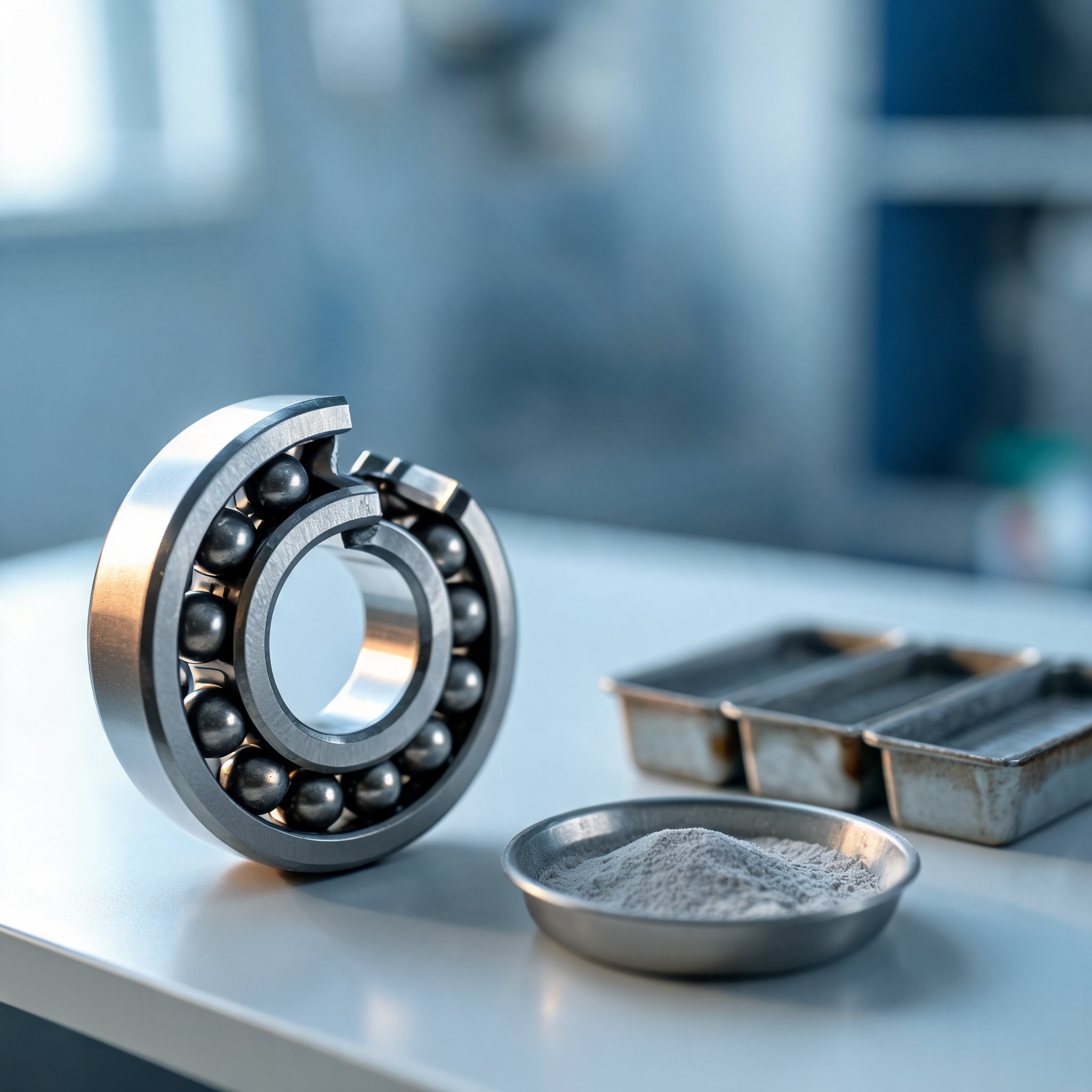
SKF has opened a Ceramic Process Laboratory (C-Pro Lab) at its research and development center in Houten, the Netherlands. The company said the facility is designed to give it command of the entire ceramic manufacturing value chain, from raw material powder processing to the engineering of high-performance components, and that it expects the lab to accelerate global adoption of advanced hybrid bearing technology.
The C-Pro Lab operates as a global competence center within SKF's research and technology development organization. Bringing powder formulation, compaction, sintering and surface finishing together in one location is meant to let researchers prototype new material compositions quickly, optimize microstructures and improve process efficiency for high-volume manufacturing. The stated aim is end-to-end mastery of the ceramic process rather than isolated steps.
Why hybrid bearings matter
Hybrid bearings combine high-grade steel rings with silicon nitride rolling elements. SKF says this construction delivers superior electrical insulation, lower weight and reduced friction compared with conventional all-steel bearings. The company links rising demand for the technology to the shift toward electrification and higher energy efficiency across industry.
Target sectors and stated performance
SKF names industrial automation, aerospace and high-speed machinery among the fields where hybrid ceramic bearings are used to address operational problems. In high-speed electric motors, the company says, ceramic technology helps prevent electrical erosion; it also cites friction reductions of up to 50 percent and reliability at extreme temperatures. These figures and characteristics are SKF's own claims, and the announcement does not present third-party test results or field data behind them.
Because the lab spans the front end of ceramic production as well as finishing, SKF says it can tune material behavior at each stage. For bearing users, the practical interest lies in mitigating electrical erosion in electrically stressed motors and maintaining reliability in high-temperature, high-speed duty; the company has not published quantitative durability results from the new facility.
Company view and opening
Annika Ölme, SKF's chief technology officer and senior vice president for technology development, said ceramic and hybrid bearing technologies are essential enablers of clean and reliable rotation in next-generation industrial electrical applications. According to Ölme, the lab allows the company to work across the complete ceramic process, which should let it innovate faster, optimize material performance and speed the commercialization of hybrid solutions for customers worldwide.
The official opening brought together customers from railway, aerospace and drives, along with other stakeholders and H.E. Julius Liljeström, the Swedish Ambassador to the Netherlands. SKF presented the event as a sign of the close customer collaboration it sees as central to industrial innovation and sustainable technology.